
AC、DC、EC 風扇有什麼差別?工業風扇馬達類型比較
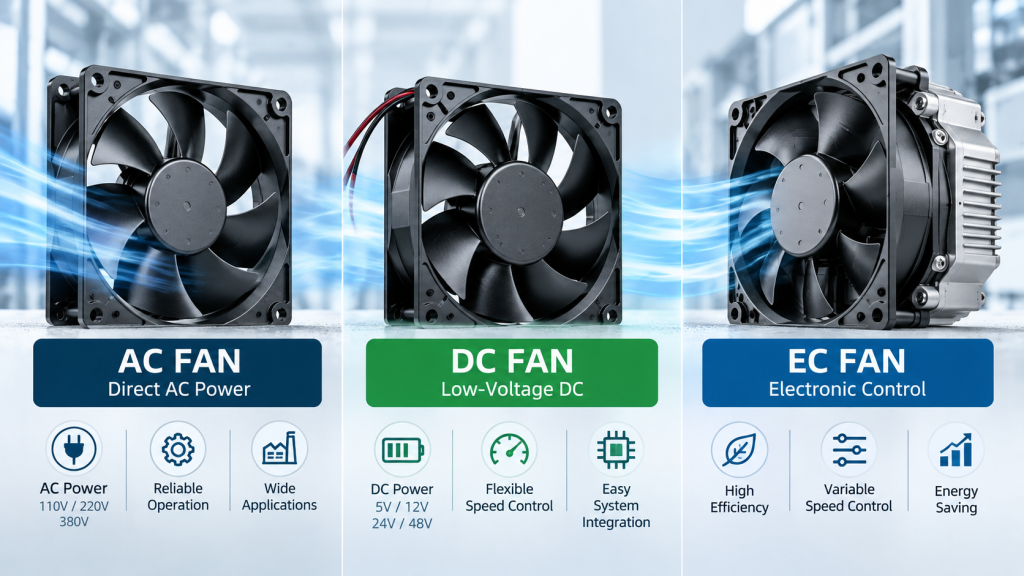
AC、DC、EC 風扇有什麼差別?工業風扇馬達類型比較 在選擇工業風扇、散熱風扇或設備通風風扇時,經常可以看到 AC、DC 與 EC 三種不同類型。它們最大的差異來自供電方式、馬達技術、效率以及控制方式,而不同設備的使用環境與系統需求,也會影響適合採用哪一種類型。 了解 AC、DC 與 EC 風扇的基本差異,可以幫助設備設計人員在風量、控制、能源效率與系統整合之間做出更合適的選擇。 什麼是 AC 風扇? AC(Alternating Current,交流電)風扇使用交流電源運轉,常見於工業設備、通風系統與各類機械設備。 由於許多工業環境本身就提供 AC 電源,因此 AC 風扇可以直接整合至設備供電系統中。 常見的 AC 風扇電壓包括: AC 風扇結構成熟、應用廣泛,特別適合持續運轉的工業通風與設備散熱需求。 什麼是 DC 風扇? DC(Direct Current,直流電)風扇使用直流電源運轉,常見電壓包括: DC 風扇廣泛應用於電子設備、控制箱、通訊設備、電源系統以及其他需要低電壓供電的設備。 相較於傳統 AC 風扇,DC 風扇通常更容易整合轉速控制與電子控制功能,因此特別適合需要精確散熱管理的設備。 什麼是 EC 風扇? EC(Electronically Commutated)風扇採用電子換向馬達技術。 EC 馬達結合電子控制與高效率馬達設計,可以在較廣的運轉範圍內進行轉速調整,同時維持良好的能源效率。 因此 EC 風扇常見於: 對於需要長時間運轉、變速控制或能源效率管理的設備而言,EC 風扇通常具有較大的應用彈性。 AC、DC、EC 風扇主要差異 三種類型並沒有絕對的好壞,主要差異在於設備的電源條件與控制需求。 AC 風扇適合直接使用交流電源的工業設備與通風系統,技術成熟且應用廣泛。 […]
風扇風量與靜壓有什麼差別?工業風扇選型基礎
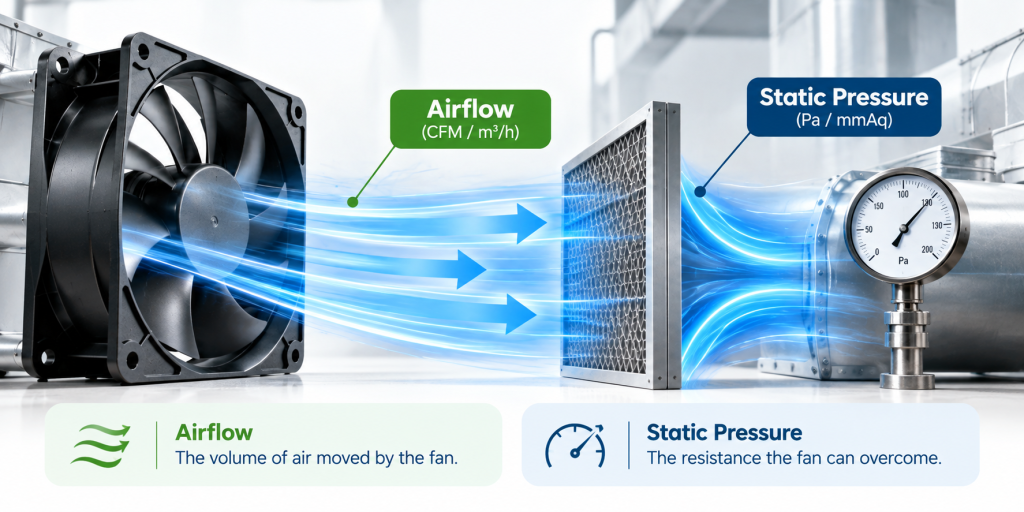
風量與靜壓是什麼? 在選擇工業風扇、散熱風扇或設備通風風扇時,**風量(Airflow)與靜壓(Static Pressure)**是兩個非常重要的性能參數。 很多人在挑選風扇時,第一個注意到的通常是風量,認為 CFM 越高,散熱效果就一定越好。 但實際上並不一定。 當風扇安裝到設備後,空氣可能需要通過濾網、散熱鰭片、風道、防護網或其他內部結構,這些都會產生空氣阻力。此時除了風量之外,風扇能否提供足夠的靜壓也非常重要。 因此,了解風量與靜壓的差異,是工業風扇選型最基本的觀念之一。 什麼是風量(Airflow)? 風量代表風扇在一定時間內能夠輸送多少體積的空氣。 常見單位包括: 簡單來說,在相同條件下,風量越大,代表風扇每單位時間能夠輸送的空氣越多。 因此,在設備通風、電控箱散熱、HVAC 系統及一般工業通風等應用中,風量通常是重要的選型參數。 不過,規格表上標示的最大風量,並不代表風扇實際安裝到設備後仍然能夠提供相同的風量。 什麼是靜壓(Static Pressure)? 靜壓可以理解為風扇克服空氣阻力的能力。 常見的靜壓單位包括: 當空氣通過濾網、散熱器、熱交換器、風道、防護網或狹窄的設備內部空間時,就會產生阻力。 阻力越大,風扇就需要具備足夠的壓力,才能維持所需要的空氣流動。 因此,最大風量比較大的風扇,不一定就是最適合設備的風扇。 風量與靜壓有什麼差別? 可以用一個簡單的方式理解: 風量代表風扇能搬動多少空氣;靜壓則代表風扇克服阻力、推動空氣的能力。 例如,一個幾乎沒有阻力的開放式通風環境,通常比較重視風量。 但如果空氣必須通過: 此時靜壓能力就會變得更加重要。 因此,選擇風扇時不能只比較 CFM,而應該同時考慮設備實際的系統阻力。 為什麼阻力增加,風量會下降? 風扇的實際性能會隨著系統阻力而改變。 當系統阻力較低時,風扇通常能提供較大的風量;隨著阻力增加,實際能夠輸送的風量就會逐漸下降。 這種關係通常會顯示在風扇的 **PQ Curve(風扇性能曲線)**中。 PQ Curve 主要表示: 在接近無阻力的情況下,風扇可以達到較高的風量。 相反地,當風量逐漸接近零時,風扇則會接近其最大靜壓。 實際安裝於設備中的風扇,通常會運作在這兩個極端之間。 什麼是風扇的工作點(Operating Point)? 實際設備中會存在一定程度的空氣阻力。 濾網、風道、散熱鰭片、防護網及設備內部結構,都可能增加系統阻力。 這些阻力可以形成一條 System Resistance Curve(系統阻力曲線)。 當風扇的 PQ Curve 與系統阻力曲線相交時,這個位置稱為: […]
Understanding Fan IP Ratings: What IP54, IP55 and IP68 Mean
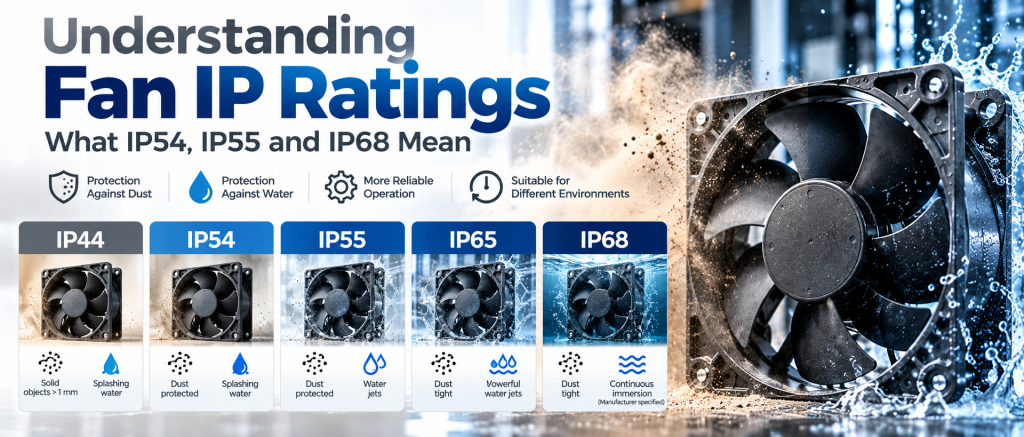
Understanding Fan IP Ratings: What IP54, IP55 and IP68 Mean When selecting a fan for industrial equipment, airflow, static pressure and fan size are not the only factors to consider. The operating environment can also have a significant impact on fan reliability and service life. Fan IP ratings indicate the level of protection provided against […]
Fan Speed Explained: Understanding RPM in Fan Specifications
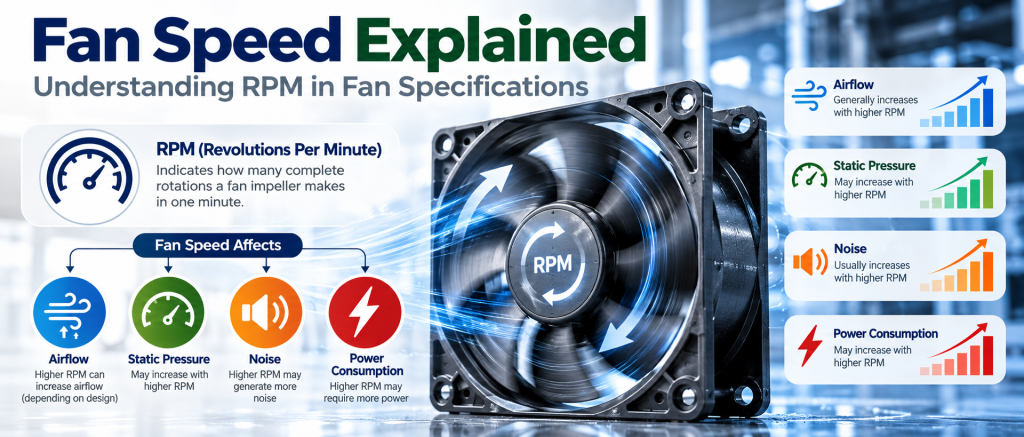
Fan Speed Explained: Understanding RPM in Fan Specifications When comparing industrial fans, fan speed RPM is one of the most common specifications shown in a datasheet. RPM indicates how fast the fan rotates, but a higher RPM does not automatically mean that a fan is better for an application. Fan speed affects several aspects of […]
Fan Noise Explained: Understanding dB(A) in Fan Specifications
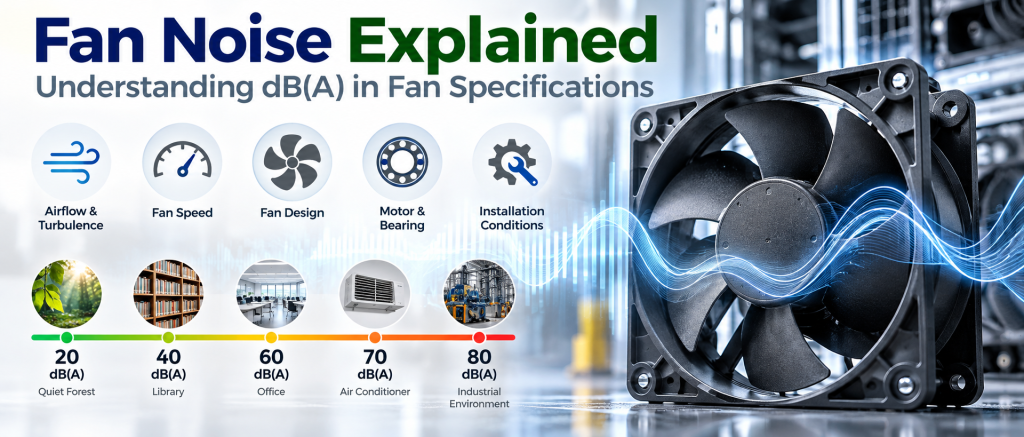
Fan Noise Explained: Understanding dB(A) in Fan Specifications When selecting an industrial fan, airflow and static pressure are often the first specifications engineers consider. However, noise can also be an important factor, especially when fans are installed in equipment operating near people or in noise-sensitive environments. Fan noise is commonly expressed in dB(A). Understanding what […]
What Does IP Rating Mean for Industrial Fans?
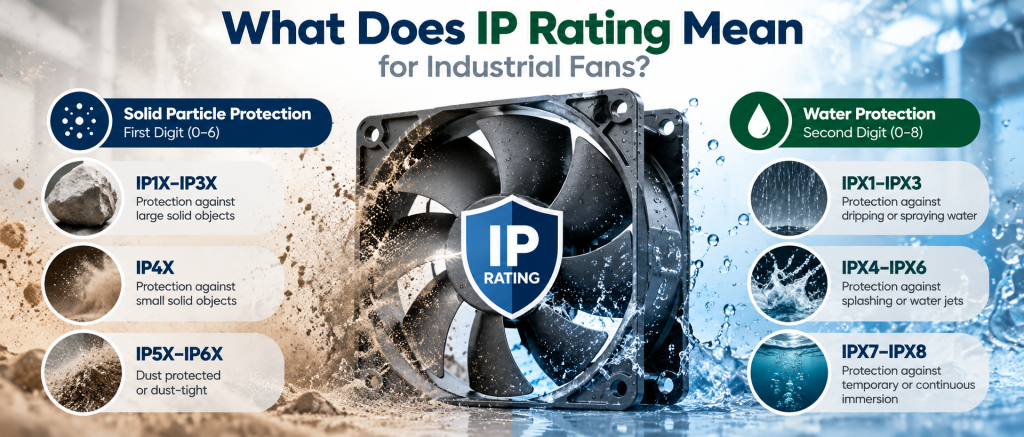
What Does IP Rating Mean for Industrial Fans? When selecting an industrial fan, airflow, static pressure, voltage and dimensions are usually among the first specifications engineers consider. However, the operating environment is equally important. Industrial fans may be exposed to dust, moisture, water or other environmental conditions that can affect reliability and service life. This […]
Ball Bearing vs. Sleeve Bearing Fans: What’s the Difference?
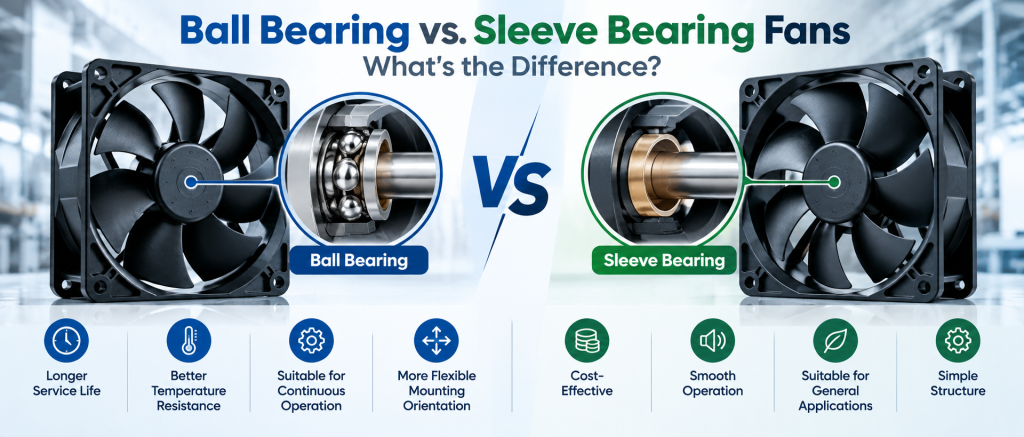
Ball Bearing vs. Sleeve Bearing Fans: What’s the Difference? When selecting a cooling or ventilation fan, airflow and static pressure are not the only factors to consider. The type of bearing used inside the fan can also affect its operating characteristics, service life, noise and suitability for different applications. Two of the most common bearing […]
How to Select the Right Fan for Your Application
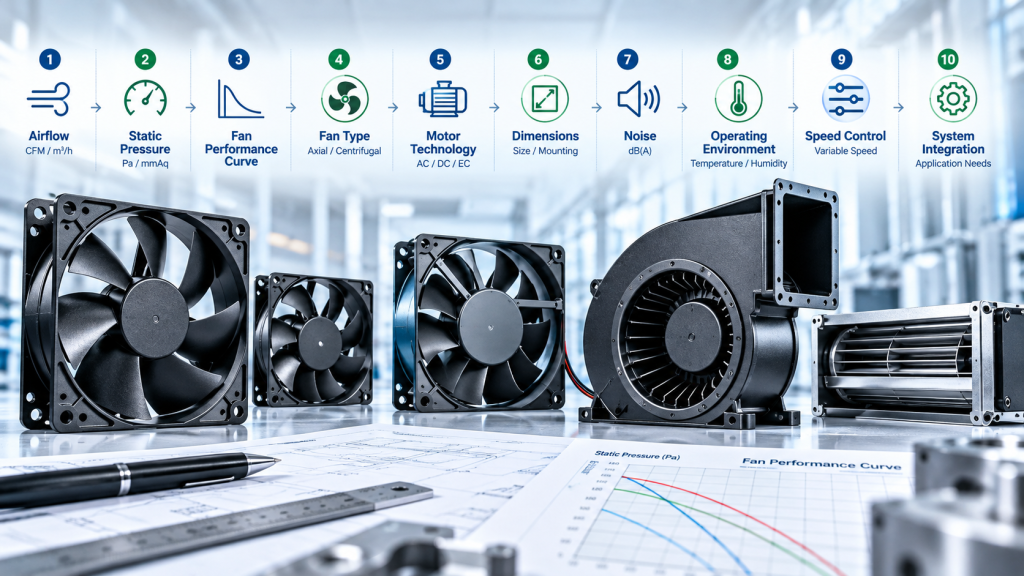
How to Select the Right Fan for Your Application Selecting an industrial fan involves more than choosing the correct size or comparing maximum airflow. A fan operates as part of a complete system. Filters, heat exchangers, ducts, enclosures and other components create resistance that affects the actual airflow delivered by the fan. For this reason, […]
Axial Fan vs. Centrifugal Fan: What’s the Difference?
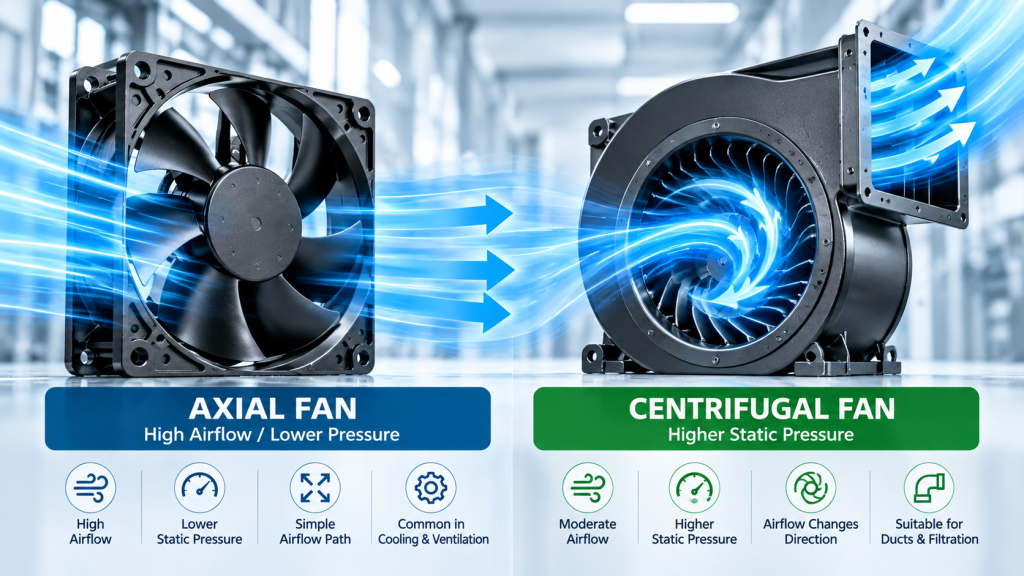
Axial Fan vs. Centrifugal Fan: What’s the Difference? Selecting the right fan for an industrial application involves more than simply choosing the required airflow. One of the most important decisions is determining which type of fan is best suited for the system. Two of the most common types used in industrial equipment and ventilation systems […]
How to Read a Fan Performance Curve
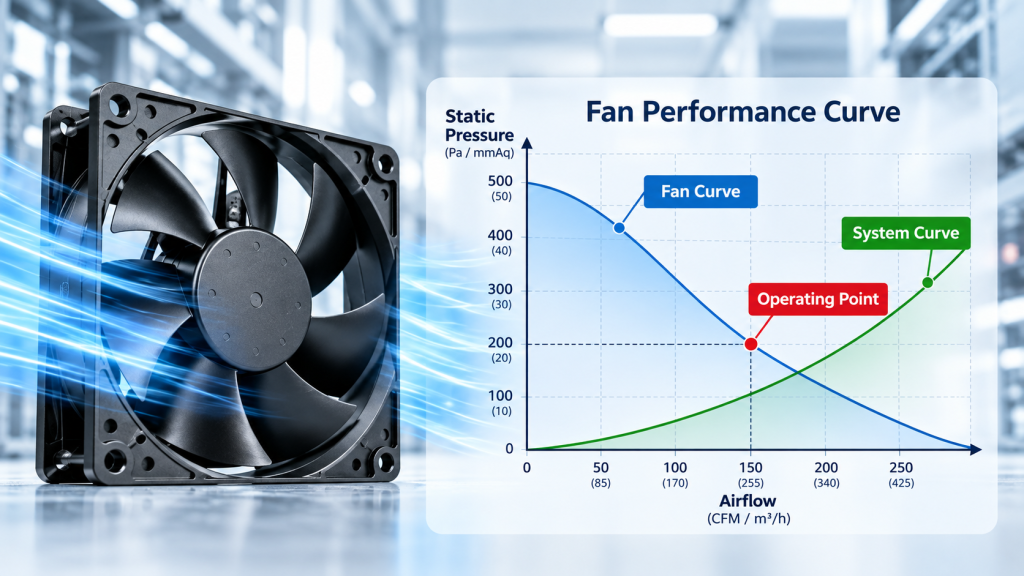
How to Read a Fan Performance Curve Selecting the right fan involves more than checking its maximum airflow. In actual equipment, airflow changes depending on the resistance within the system. This is why fan performance curves are important. A fan performance curve shows the relationship between airflow and static pressure, helping engineers understand how a […]